
League Structure, Promotion & Relegation
Every club in Goal Legends plays in a real division, in a real country, against the same opponents everyone else in that division sees. Here's how those divisions are laid out, what actually moves a club between them, and what changes once it does.
Eight countries, two tiers each
Goal Legends currently supports eight playable countries, and each one runs two divisions: a top tier, called Elite, and a second tier below it, called National. That's sixteen divisions in total, each with its own full set of clubs, its own fixture list, and its own table. A club in the Dutch Elite division never plays a club from the German National division in league football; the two countries' seasons run entirely in parallel and only cross paths at the very top of the sport, in the Elite Champions Cup.
Every club, in every division, is a real football club being run by somebody. Most of the time that somebody is a manager like you. If a club has nobody managing it, the game's own AI takes the decisions instead, so the league table still fills up and the season still plays out properly around you, opponent by opponent, whether or not every seat in the division is claimed by a human.
Each division's full fixture list is set before a ball is kicked, home and away against every other club in that division. See Fixtures & Friendlies for how those league matches sit on the calendar alongside cup football and any friendlies you arrange yourself.
How promotion and relegation work
At the end of every season, the top three clubs in a country's National division are promoted into that country's Elite division for the following season. At the same time, the bottom three clubs in the Elite division are relegated down into National. The two groups effectively swap places: three up, three down, every country, every season, no exceptions for a club that's new or one that's been in the top flight a long time.
There's no play-off round and no vote involved. Final league position at the moment the season closes is what decides it, the same table you can check at any point in the season on the standings page for your country. Everything between third from top and third from bottom in each division simply stays put for the following season.
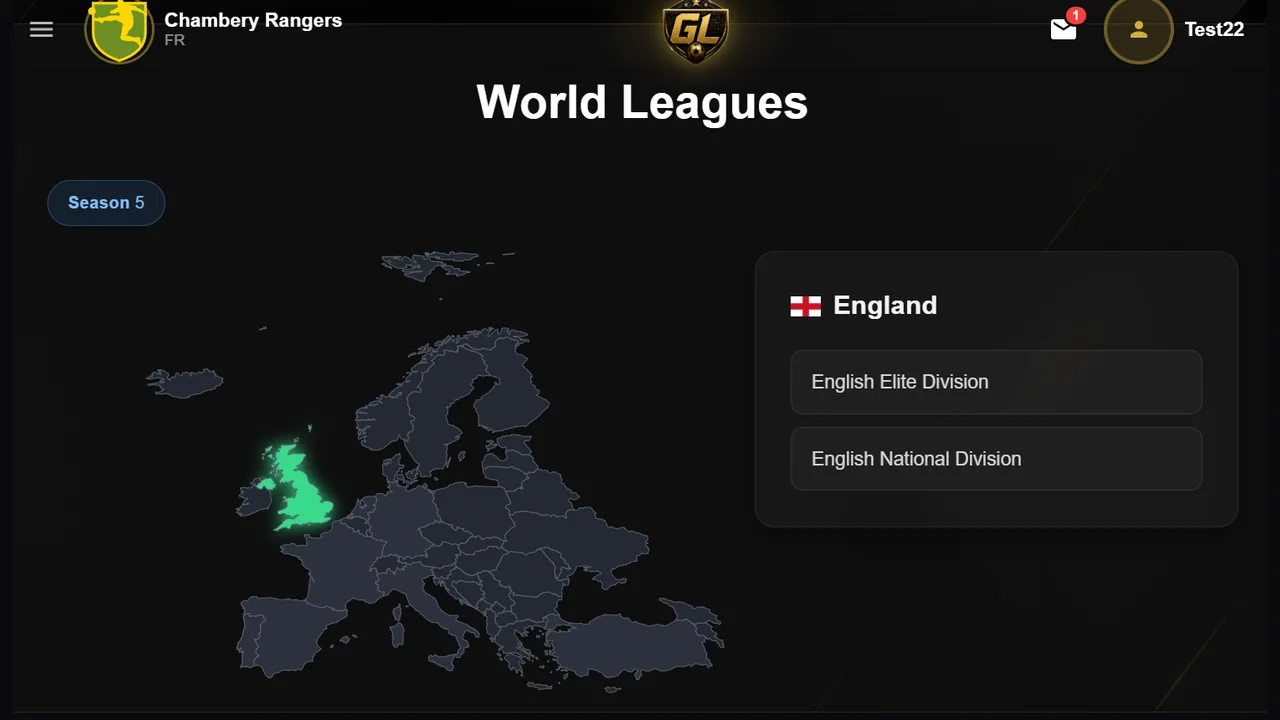
What moving divisions actually changes
Getting promoted or relegated moves your club's Reputation, which is the same number that quietly shapes how many supporters actually show up on a matchday. See Club Finances Explained for what Reputation feeds into. Promotion is rewarded with a reputation boost; relegation costs some, on top of whatever Reputation your results already earned or lost you across the season.
Beyond that, moving up a division simply means a different, generally stronger, pool of opponents next season, and moving down means the opposite. Nothing about your squad, your facilities, or your finances is reset by the move itself; you carry all of it with you into whichever division you're in next, along with any Domestic Cup or Elite Champions Cup form your club already has going.
Leagues, cups, and the calendar
A division's table only tells part of a season's story. Every club also plays its own country's Domestic Cup alongside its league fixtures, and clubs that reach the Elite Champions Cup take on opponents from other countries entirely, all inside the same season. Neither competition replaces your league fixtures or changes how promotion and relegation get worked out; the division table only ever counts results against the other clubs sharing that division with you.